From S$10,000 salary to hawker stall: This 30-year-old chooses Hokkien mee over tech job
Alvin Tan left the technology sector before retrenchment could reach him. He now works longer hours, earns much less but has greater control over his future. Was it worth it, Money Mind asks.
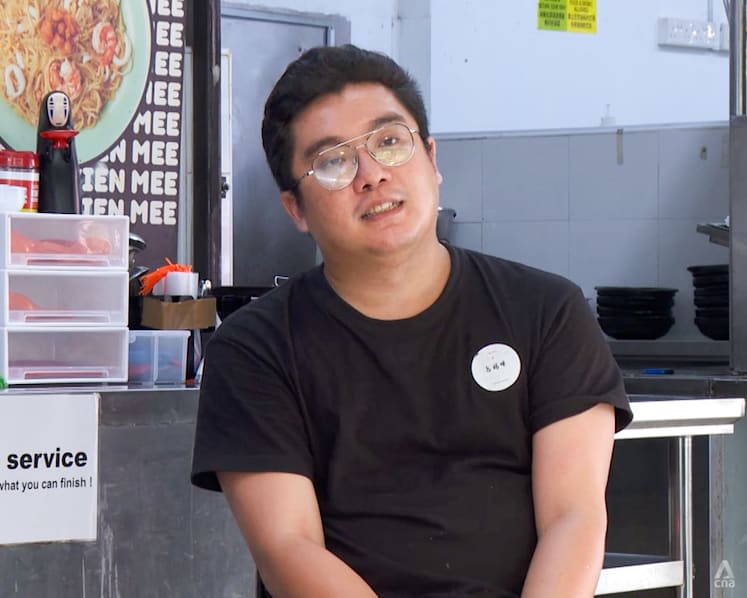
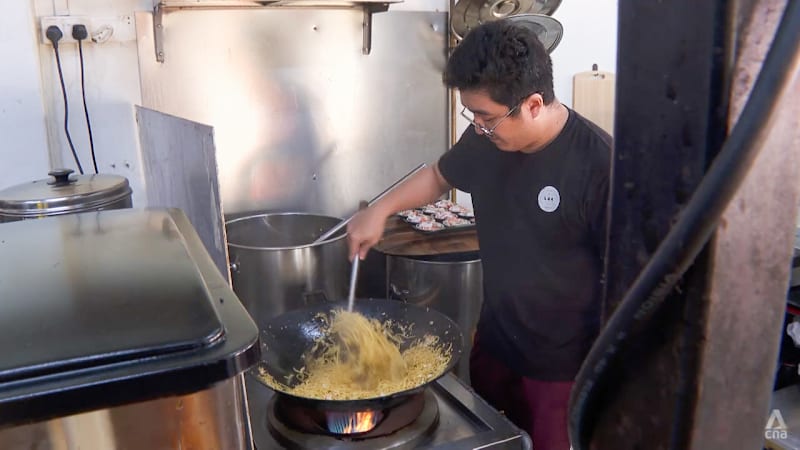
Alvin Tan speaking to Money Mind about his career switch in front of his Hokkien mee stall.

This audio is generated by an AI tool.




SINGAPORE: When Alvin Tan’s ex-company, Meta, began retrenching about 10 per cent of its workforce in May, he was not surprised. With the rise of artificial intelligence, he had seen it coming.
“There was always this joke about software engineers coding themselves out of (their) jobs,†the 30-year-old said. “I could’ve been (among) that 10 per cent.â€
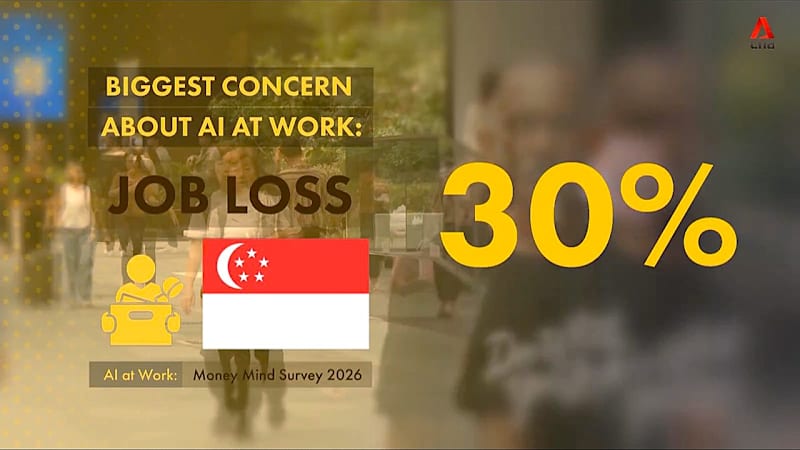
Software engineers are not alone, however, in seeing retrenchment as a real possibility. A Money Mind survey found that three in 10 young workers in Singapore count job loss as one of their biggest concerns about AI.
Instead of waiting to see what would happen in the technology sector, Tan walked away first when his contract with Meta ended.





Instead of his S$10,000 tech salary, he now earns up to S$4,000 a month from selling Hokkien mee, a prawn noodle dish.
“If I (have) to be kicked out by someone, how about I just be kicked out by myself?†he said. “I’d rather be held accountable (for) my own actions instead of something that’s out of my control.â€
His story is told on , which looks at the trade-offs between salaried employment and self-employment, the financial realities behind his new business and what it takes for him to try to make it work.
WATCH: S$10,000 tech salary to S$4,000 hawker (8:57)
STARTING SMALL, THE SOFTWARE WAY
One thing that helped Tan with his Hokkien mee business was an approach employed in software engineering: Start small, test what works and “build it into a proper productâ€.
Rather than sinking his fortune into a venture from the outset, he began by cooking at home and giving away plates of Hokkien mee for free.
Then he moved on to food events before opening his own stall, Umami, in Geylang in July last year. “You don’t just jump right into it and say, ‘Guys, today I’m going to open up a cafe,’†he said.
Getting people to like his Hokkien mee was only part of the challenge. When he began charging for his food, he realised that while he had spent time perfecting its taste, he had made his first mistake.
“I just tried to do my best (with) the dish,†he said. “I didn’t really think about ... the cost.â€
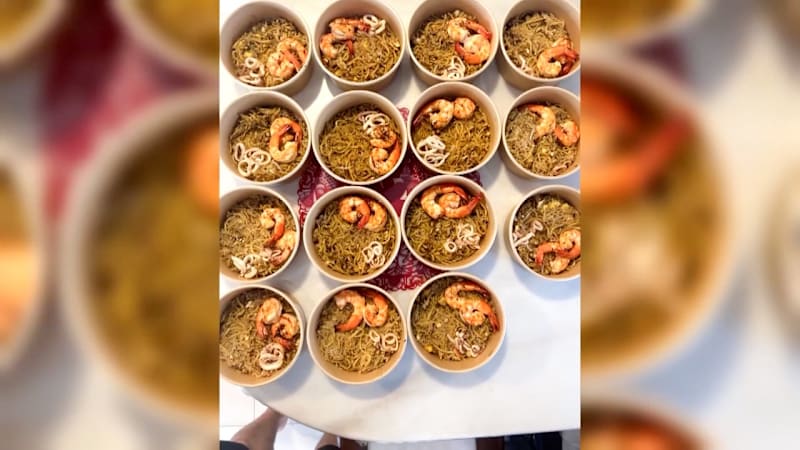
With Hokkien mee typically priced at about S$5 to S$6, he had to balance ingredient costs against what customers were willing to pay.
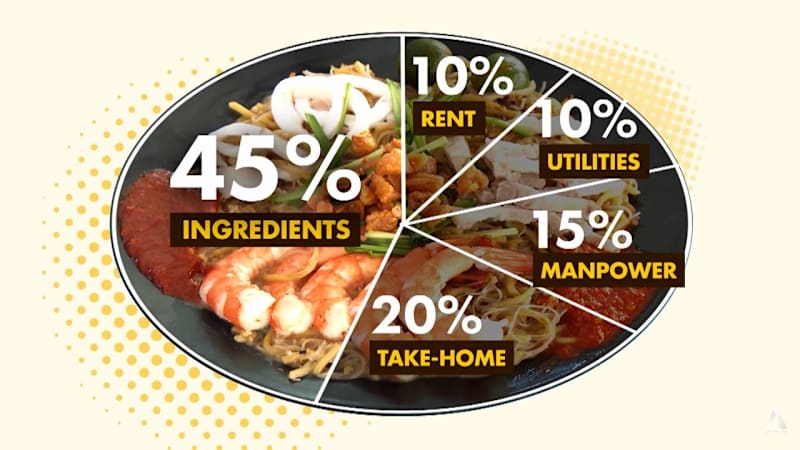
His dish now sells for S$6 or S$8 a plate. His stall brings in up to S$19,000 a month, but 45 per cent goes towards ingredients. After rent, utilities and manpower, he keeps about 20 per cent of the earnings.
Getting there also took time. He must sell about 45 plates before he starts earning money for himself, but he was selling fewer than half that number for months.
“There were also days (when) I threw away a lot of my ingredients, which (made me) very sad,†he said. But as more customers discovered the stall and became regulars, business improved.
“First thing when you start a business is always to protect yourself,†he reflected. “Don’t just   spend your life savings to start a shop. Try to start something small and gain traction from there.â€
GROWING WITHOUT LOSING TOO MUCH
While Tan’s stall is profitable today, keeping it that way is a challenge as costs rise.
Gas has become more expensive, the price of prawns has also gone up, and he is absorbing these increases for now instead of passing them on to customers. As he sees it, there is little room for manoeuvre on cost.
“Where can it eat into?†he said. “It can’t eat into your manpower unless you (have to) fire someone. It can’t eat into your other things. It can only eat into what you take home.â€
He may raise prices, however, if his take-home amount falls to 10 per cent.
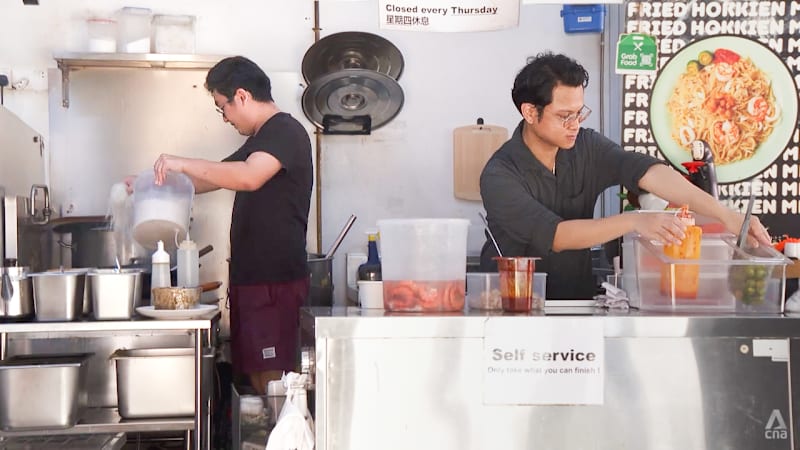
Still, hiring extra help is on his mind. He has a part-time assistant, but taking on a permanent worker would be slightly beyond what the business can comfortably afford.
If he sells another 10 plates a day, he estimated, he will be in a better position to hire a full-time worker.
And if demand grows, he thinks the extra manpower will be needed, even if it means earning less himself in the short term.
“I can’t do this alone,†said Tan. He hopes to eventually find someone he can trust, whether it’s a worker or a partner, who recognises the potential of the business.
For his part, he knows that expansion will present a choice. And holding on tightly to what he earns now could limit the stall’s growth. “You have to sometimes let go to gain more,†he said.
AN “OPPORTUNITY COSTâ€, NOT A SACRIFICE
The way Tan manages his money has also changed since he left salaried employment.
Unlike before, he does not receive employer Central Provident Fund (CPF) contributions. He is currently not putting his own money into his CPF but plans to do so in future to fund his Build-To-Order (BTO) flat.
His circumstances have helped to make his career switch possible. His needs are little: Enough for meals, public transport, his BTO flat next year and perhaps one annual vacation, he cited.
He is not planning to have children, which he said gives him “more financial freedom†and flexibility. For someone with a family and children, moving into the food and beverage business might not be “the right choiceâ€, he added.
It is not only about the financial trade-offs for him. Running his Hokkien mee business has left him with less time for family and friends, less sleep and less rest or time to pursue other interests.
“I won’t call it sacrifice. I’ll call it opportunity cost,†he said.
A year after leaving the tech sector, he may be earning less, working longer hours and bearing more financial risk, but his business gives him room to do something else more easily: Change processes himself when something is not working.
Besides not worrying about retrenchment as a self-employed person, he can learn from his mistakes and act on what he thinks “makes sense†without having to deal with red tape. That “freedom†of control “can be quite fulfillingâ€.
And when something finally works after many hours of effort, he said, “that’s magicalâ€.