analysis Asia
Snap Insight: Indonesia in need of rail safety overhaul after fatal train crash
Experts urge separate tracks for long-distance and commuter trains, among other measures, in the wake of Monday’s (Apr 27) train collision that killed 15 people and injured dozens.
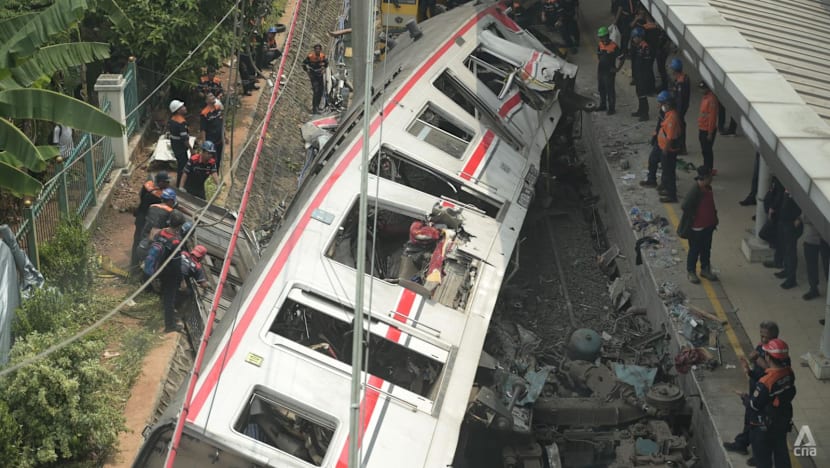
Technicians clear a train carriage from the tracks following a fatal collision between a commuter train and a long-distance train in Bekasi, West Java on Apr 28, 2026. (Photo: CNA/Wisnu Agung Prasetyo)

This audio is generated by an AI tool.


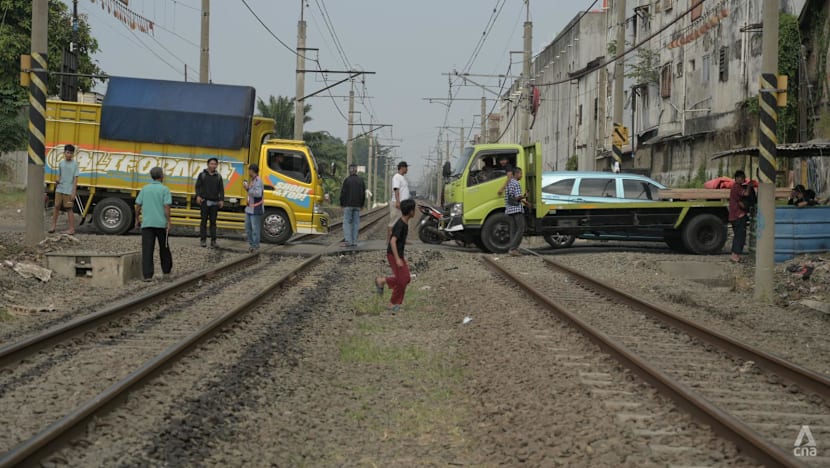
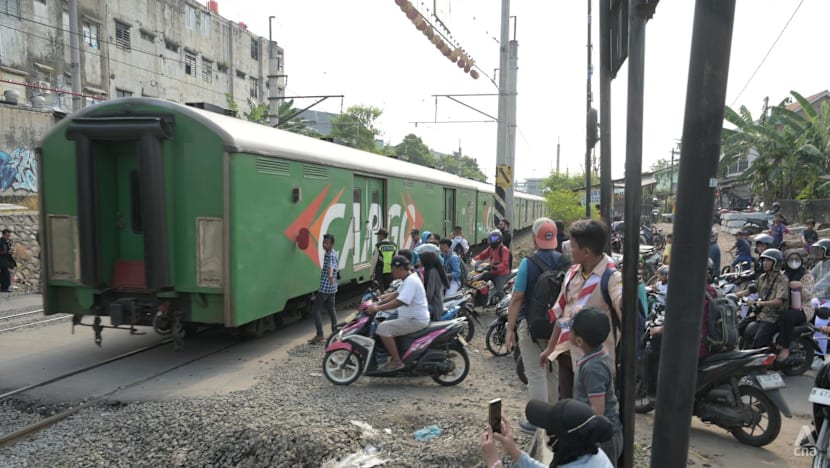
JAKARTA: It is a common sight at many level crossings across Greater Jakarta: cars, motorcycles and trucks speeding up instead of slowing down when barriers are lowered and warning bells signal an approaching train.
Even fully lowered barriers, the blare of the train horn and the increasingly urgent rumbling on the tracks are not enough to deter some motorists from ducking underneath the barrier and taking a high-risk gamble on the train’s distance.
On other occasions, vehicles get caught in the middle of the track and are hit by oncoming trains.
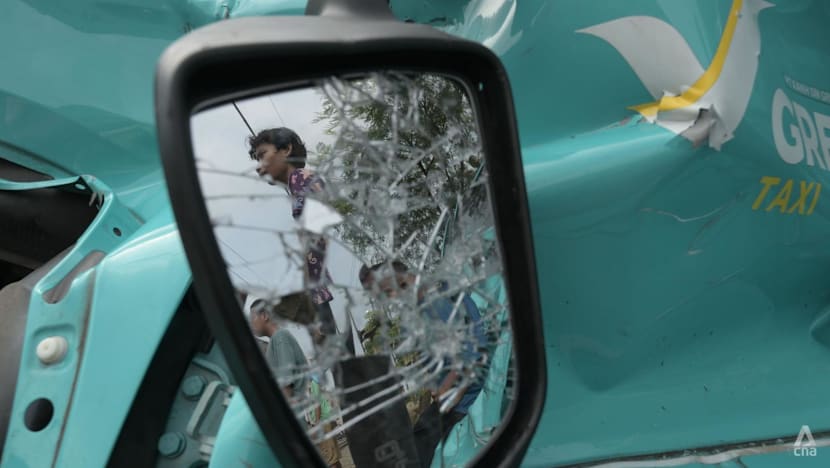
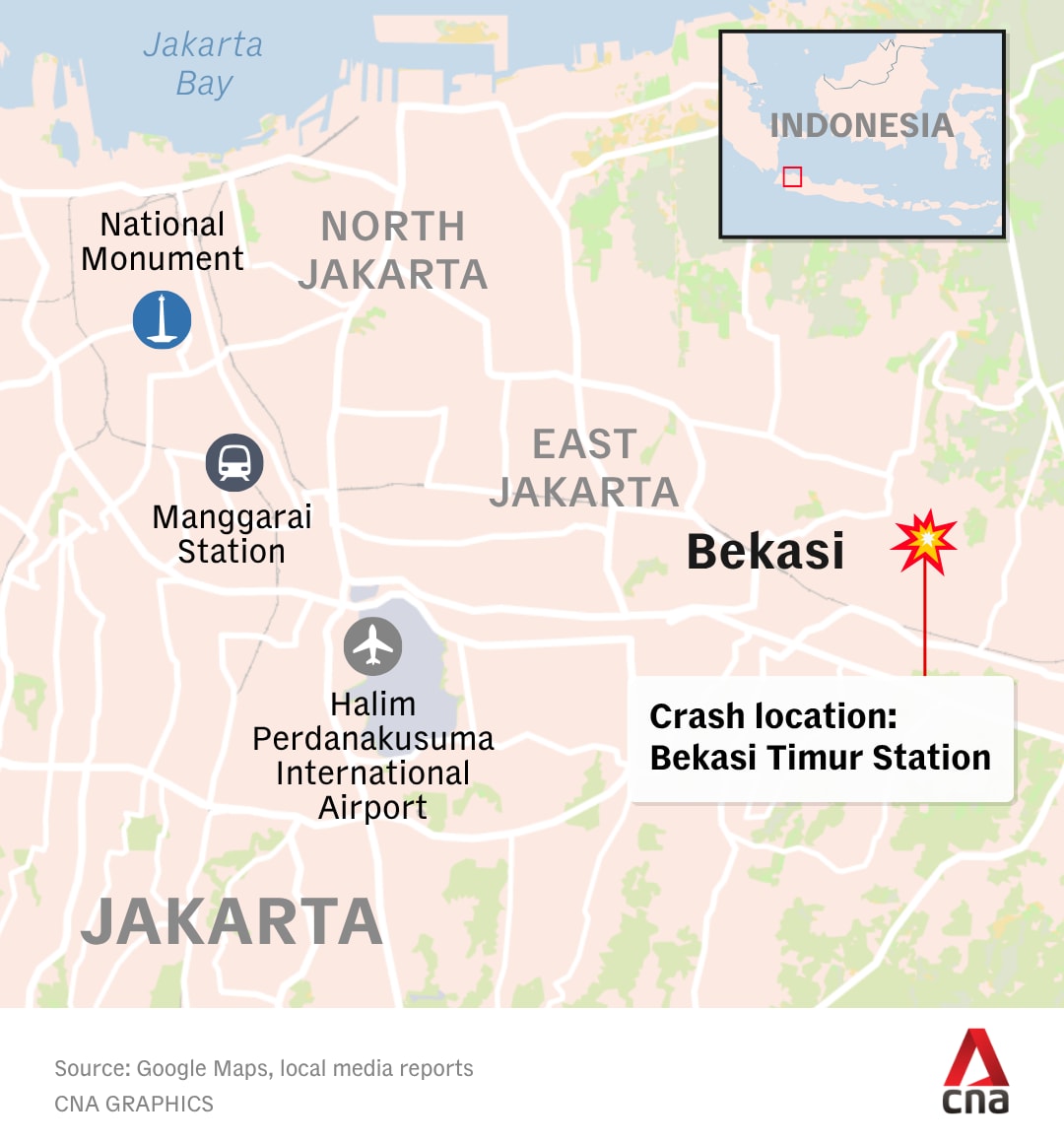
This was what happened on Monday night (Apr 27), when an electric taxi crossing the tracks along Jalan Ampera - a narrow potholed road in Jakarta’s neighbouring city of Bekasi - suddenly broke down and was hit by a train approaching the nearby East Bekasi Station.
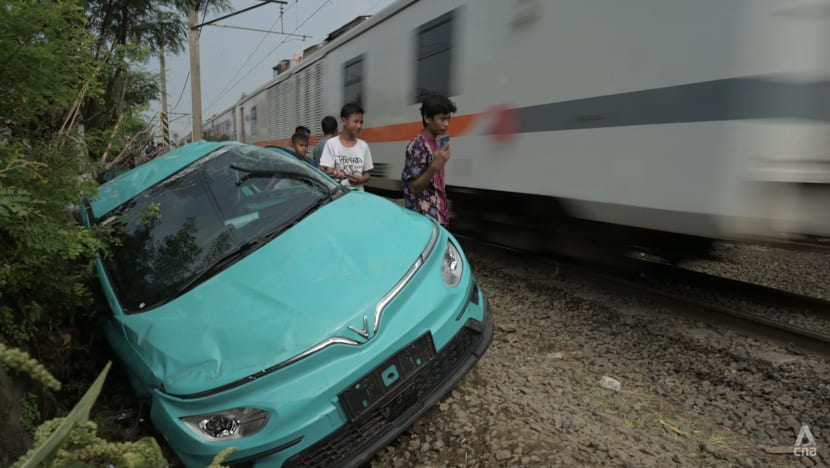
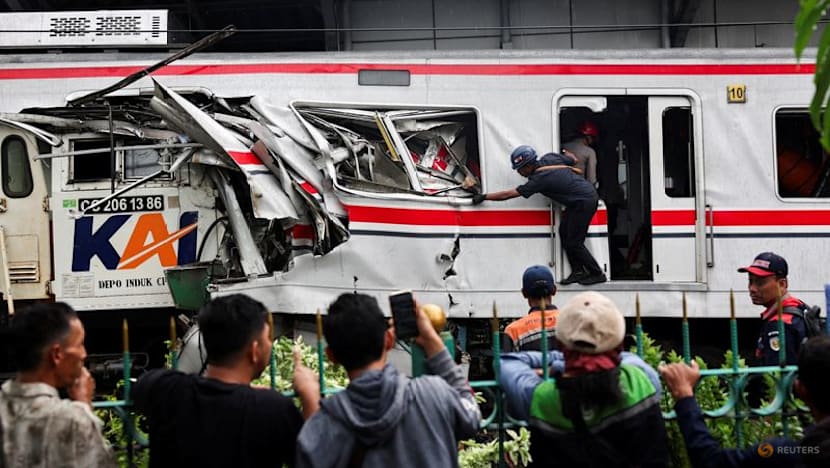
With train operator Kereta Api Indonesia (KAI) instructing a second commuter train travelling in the opposite direction to remain at East Bekasi Station, a third train travelling from Jakarta to Surabaya in East Java crashed into the stationary commuter train, crushing passengers who were in a packed all-female carriage at the rear.
In the wake of the accident, which killed 15 people and injured over 80 others as of Tuesday evening, experts and advocacy groups have called for a thorough investigation into the circumstances that led to the tragedy as well as heightened safety measures, even as President Prabowo Subianto has pledged to phase out level crossings nationwide.
Experts said there should be separate tracks for express long-distance trains and commuter trains, and sufficient funds allocated to build overpasses to replace the level crossings.
As to a minister urging train operators to move women-only carriages from the rear and front to the middle of trains, where the women passengers will presumably be more protected, the experts said there could be downsides.
PHASING OUT LEVEL CROSSINGS
The incident has led to renewed calls for Indonesia to phase out nearly 4,000 level railway crossings across the nation. Many of these crossings, like the one in Jalan Ampera, are unmanned and without traffic signals, warning bells or barriers.
Prabowo visited the injured at a local hospital on Tuesday, after which he promised to phase out level crossings nationwide, particularly the ones in Java, where 60 per cent of the country’s population live.
“I have observed that many of these crossings are unmanned. They have been that way since the Dutch (colonial) period. I will immediately order that all such crossings be improved, whether through guard posts or flyovers,� he said.
Prabowo said there are around 1,800 level crossings in Java, and that his administration would allocate 4 trillion rupiah (US$231 million) to upgrade them.
There are more than 3,800 level crossings across the country, according to train operator KAI.

A study by the Indonesian Transportation Society (MTI), a group of academics, industry practitioners and bureaucrats, found that around 300 accidents occur at level crossings each year, with 81 per cent taking place at unmanned crossings.
“Road user discipline is still low (in Indonesia) and thus the risk of violations and accidents will continue to increase,� Djoko Setijowarno, a transportation expert from Central Java’s Soegijapranata Catholic University, told CNA.
However, Prabowo’s 4 trillion rupiah allocation is too small, Djoko said. A 2022 estimate by Indonesia’s Ministry of Public Works put the cost of replacing a level crossing with an overpass at around 150 billion rupiah each.
This means Prabowo’s 4 trillion rupiah budget may only be enough to build about 26 overpasses.
Djoko suggested the government could prioritise level crossings in the Greater Jakarta area and merge several level crossings into one overpass.
Such crossings are often the cause of crippling traffic in the sprawling Jakarta metropolitan area, which comprises Bogor, Depok, Bekasi, Tangerang and South Tangerang and is home to more than 30 million people.
Notwithstanding his suggestions, Djoko said the government needs to allocate more funds so that more level crossings can be phased out.
“The government can allocate a lot of money for MBG, why not (for) people’s safety?� Djoko said, referring to Prabowo’s free meal initiative, which is expected to cost 335 trillion rupiah this year alone.
MOVING WOMEN CARRIAGES NOT A SOLUTION
Adriansyah Yasin Sulaeman, executive director of the think tank Forum Transport for Jakarta, said the incident serves as a wake-up call for the authorities to improve the ageing rail network, including separating tracks for express long-distance trains and commuter trains.
"These commuter trains are a symbol for the working class," he said, as quoted by Reuters. "It's a big alarm for the government to seriously improve it."
Ki Darmaningtyas, chairman of the Indonesian think tank, Institute for Transportation Studies (INSTRAN), agreed.
“Tracks for long-distance trains and commuter trains have to be separated. They each have different characteristics, different speeds. Having them run on the same tracks affects not only their timetables but also safety,� he told CNA.

The incident has also prompted Minister for Women’s Empowerment and Child Protection Arifah Fauzi to ask KAI to move women-only carriages to the middle of the train.
Implemented in 2012, women-only carriages are usually found at opposite ends of the train.
Experts said the arrangement allows women easier access since the carriages are usually closest to the entrance and exit gates. It is also easier for security officials to erect barriers at train platforms without disrupting people’s movement.
“If the women-only carriages are in the middle, it will be hard to separate the women from the rest of the crowd,� transportation expert Djoko said.
TRANSPARENT INVESTIGATION NEEDED
Experts and activists called for a thorough and transparent investigation to prevent future accidents.
“How can there be two different train sets in the same block without triggering a warning in the system?� Tulus Abadi of the advocacy group, Indonesian Empowered Consumers Forum, questioned in a statement on Tuesday.
“The ministry of transportation and the National Transportation Safety Committee (KNKT) must not only perform a routine investigation but also an audit of the whole signalling system.�
The KNKT said three investigators have been deployed to gather evidence and investigate the cause of the accidents.
“The KNKT investigation team has been at the scene since last night to gather facts and information on the ground,� its spokesman Anggo Anurogo said, as quoted by Antara on Tuesday.
Anggo declined to discuss details of the investigation, including when the KNKT will issue a preliminary report.
The driver of the taxi involved in the accident was unharmed and has been questioned by the local police.
The taxi operator – the Indonesian branch of Vietnam-based Green SM, which runs a fleet of VinFast electric vehicles – said in a social media post that it will cooperate fully with the investigation.
Darmaningtyas of INSTRAN said it is important for the government to be transparent about the investigation.
“There are still many unanswered questions,� he said. “Those responsible must be held accountable.�
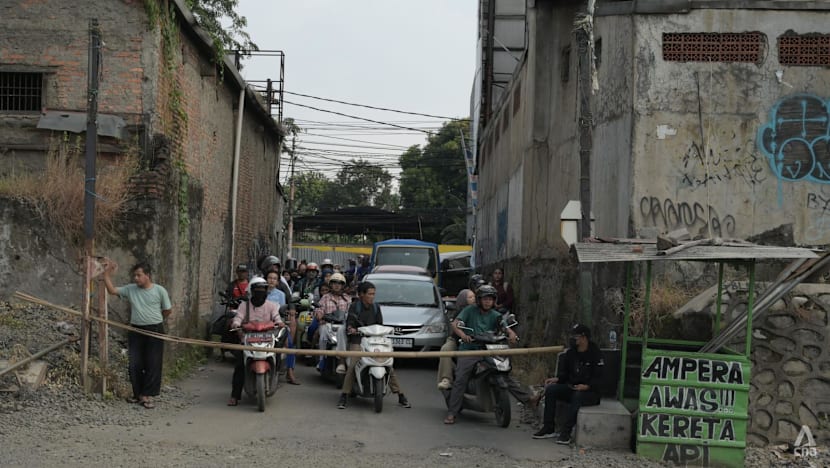
Meanwhile, life continues for the motorists and commuters near the accident site with a subtle nod to safety.
The day after the crash, the crossing on Jalan Ampera was again a hub of activity. This time, it was informally manned by locals, who stopped traffic with the use of a long bamboo pole whenever a train approached.